

A regenerative layer added at the end of your microneedling or laser visit — meant to help your skin recover smoother, calmer and more luminous as the series builds. Investigational, offered by consultation, with outcomes that vary and are never guaranteed.
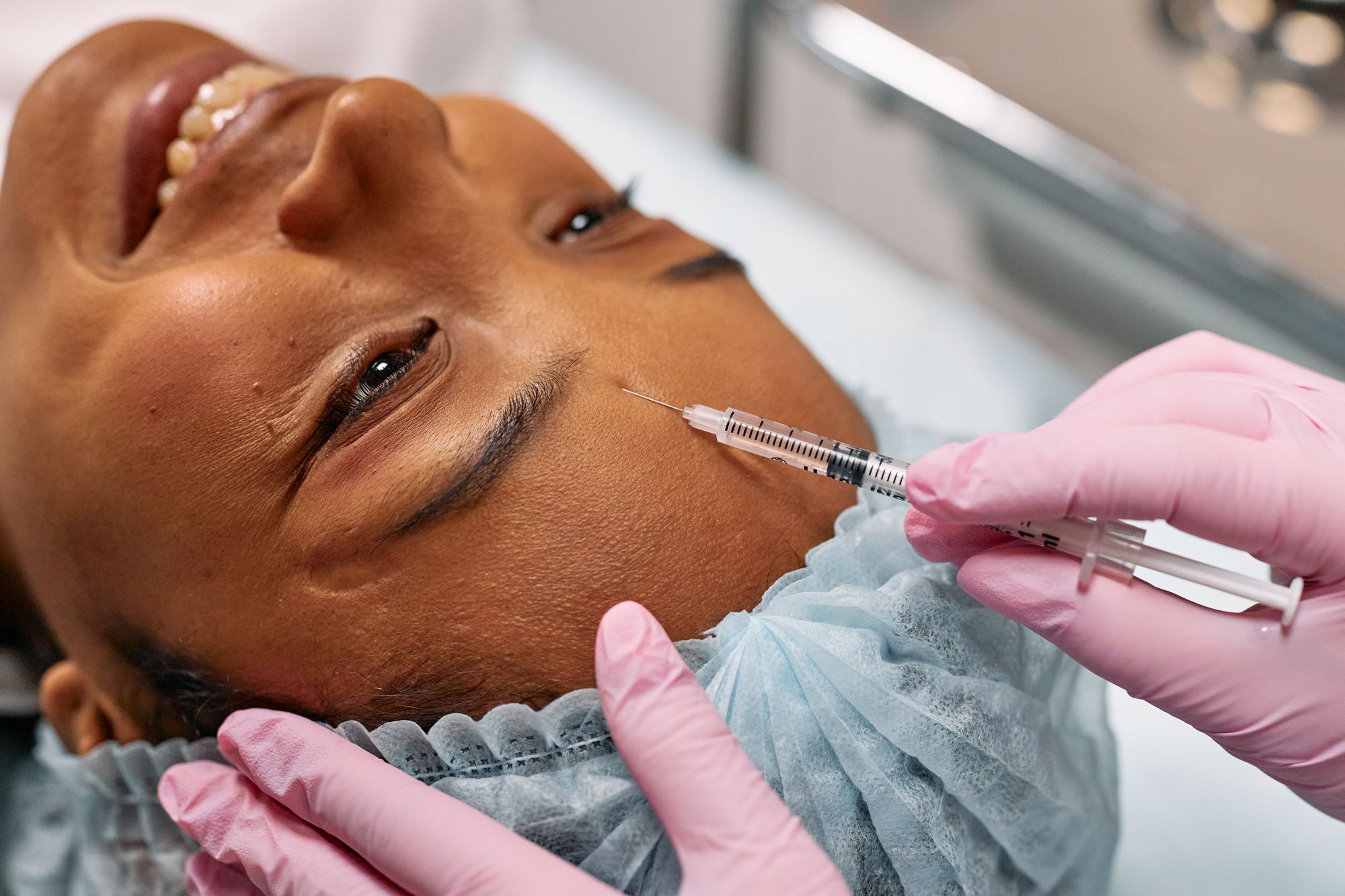
You come in for microneedling or a resurfacing laser. Right at the end — while the skin is still open and receptive — your clinician layers exosomes across the treated surface. The whole add-on takes a few minutes; you leave with the same visit, just a little more activity happening underneath.
What they are: microscopic cell-signaling vesicles drawn from mesenchymal stem cells of screened donated birth tissue (products such as Rexo from New Life Medical Service). Think of them less as a product you can feel and more as a set of instructions your skin can read — signals that support the regenerative pathways already at work after a treatment.
The microchannels from microneedling — or, when it makes more sense, a local injection — act as a temporary delivery route into the dermis, where fibroblast and matrix activity happens. The product is investigational and not FDA-approved for this use; that status is disclosed in writing at consent. Results build cumulatively over a series — not from any single visit.
Treated areas · Face · Neck · Décolleté · Scalp
Who it helps.
An emerging regenerative layer used to support how your skin recovers and how it looks between bigger treatments — most often added to a microneedling or laser visit.
Will I be red for days? Layered on right after resurfacing to support the skin's own repair and quiet the treated surface a little sooner.
Why drive out twice? Most often added at the end of your microneedling or laser session, so the treatment you already booked does a little more.
Is this hype? Exosomes are investigational and the science is still evolving — we'll walk you through what's known, what isn't, and whether it's worth it for you.
Exosomes earn their place over a paired series — not a single drop-in. Here is how a typical first cycle unfolds in our chairs.
Aura scan, history, the photos you keep flinching at. Your clinician maps which base treatment carries the exosomes — microneedling, LaseMD or Hollywood.
Base treatment performed, exosomes layered onto the open microchannels. You leave with a calmer surface than a solo resurfacing visit usually feels like.
Two more paired visits at the cadence of the carrier modality. Texture and tone start consolidating; we photograph progress against your baseline.
One paired visit every three to four months keeps the remodel going. We decide together whether to keep going or step back to a lighter cadence.
Exosomes are newer, investigational, and easy to oversell — so the honest answers, in plain language, before you decide.
No — and we'll never tell you otherwise. Exosomes are investigational for aesthetic use. The product (Rexo, from New Life Medical Service) is sourced from screened donated birth tissue and processed under MSC protocols, but its status as an add-on for skin is not FDA-approved. You'll sign a consent that says exactly that before we treat.
Nothing beyond the base treatment. Exosomes are layered onto skin that's already been microneedled or lasered — so your recovery is whatever that visit's recovery would be. Most patients report the surface feels calmer, not more reactive.
First textural change usually shows up in the two to four weeks following a visit, as the skin remodels. The real story is cumulative — three to six paired sessions, spaced with your laser or microneedling cadence, is where most patients feel it earn its place.
Almost always, yes. Exosomes need a delivery route into the skin — the microchannels left by microneedling, or the open surface after a resurfacing laser. Topical application onto intact, untreated skin doesn't do much. Occasionally we'll inject locally; your clinician will say which makes sense.
The product is from screened donor tissue and the cells themselves are removed in processing, so you're not receiving live cells. Side effects we discuss are usually mild and tied to the base treatment — redness, sensitivity, occasional small bumps. We'll review your history at consult and skip it if it's not the right fit.
Honest answer: sometimes. If you're already invested in a series of resurfacing visits, exosomes can meaningfully extend what each visit does. If you're treatment-curious and just looking to try something, we'd usually start you somewhere else first. We'll tell you which camp you're in.
Exosome protocols are matched to your skin and your other active treatments — we sequence them where they will do the most work.

Plus: how we’d use a summer with the schedule on your side. One page, refreshed each month.
Read this month →