

The little bump or red dot you keep noticing in the mirror — treated and gone in one short visit. No cutting. No laser. No fuss.

You point. We confirm it's benign. A fine probe touches the spot for a second or two — a brief radio and high-frequency pulse — and the spot is treated. Most people leave inside half an hour.
Each treated spot forms a small scab that heals over several days, revealing clean skin underneath. No incision, no stitch, no laser — only a precise, contact-based pulse where you wanted it and nowhere else.
It is the right tool for the quick wins: a milia at the brow, a cherry angioma on the chest, a skin tag at the collar — the spots a laser is overkill to address and a fingernail can't reach.
Treated areas · Face · Neck · Décolleté · Collar · Underarm
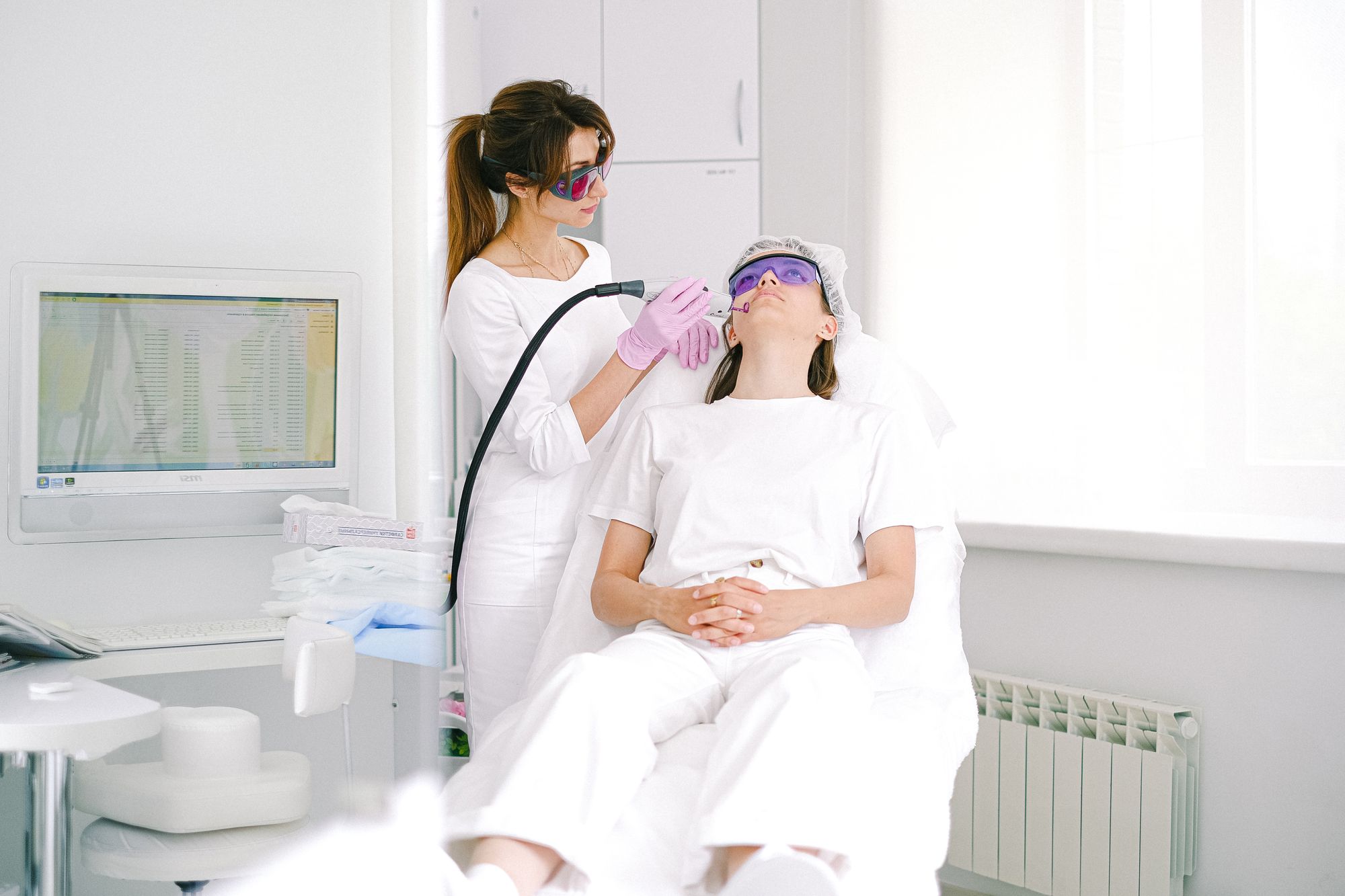
What it handles.
One short visit handles the small spots that have been bothering you for months — sometimes years.
The milia, the red dot, the skin tag at your collar — treated the day you walk in, no return visit usually needed.
The probe touches only the spot itself — surrounding skin is untouched, so the visit is short and there's no broader redness to recover from.
Each spot forms a small scab that flakes off on its own. Keep it clean, keep it covered with SPF, and the skin underneath does the rest.
The straightforward answers — what it feels like, what heals, and what to expect when you leave.
Most people describe it as a brief sting or a hot pinprick — a second or two per spot. We can numb first if you'd prefer, though many patients don't bother for one or two small spots.
A tiny scab the size of the spot forms within a day, sits quietly for several days, then flakes off on its own. No bandage, no dressing — just gentle cleansing and SPF.
Done correctly on the right type of spot, the skin underneath comes back clean. Some patients see a few weeks of pink-to-tan settling, which fades on its own — picking the scab is the main risk, so we ask you not to.
For most surface spots — milia, cherry angiomas, small skin tags — yes. Larger or deeper lesions occasionally need a brief touch-up at a follow-up, and we'll tell you upfront if we think that's likely.
No scalpel, no stitches, no broader beam. The probe touches only the spot itself — surrounding skin stays untouched — which is why the visit is short and the recovery is small.
Only after we confirm it's benign. If a spot looks suspicious — changing, irregular, atypical — we'll pause and route you to dermatology first. LAMPROBE is for the clearly cosmetic, clearly safe-to-treat.
A small bump, broken capillary, or skin tag has three other doors — here is how each one actually compares for the kind of spot we treat.
We start with a quick look at the spot together — confirm it's safe to treat, talk through what to expect, and (usually) handle it the same visit.

Plus: how we’d use a summer with the schedule on your side. One page, refreshed each month.
Read this month →