

An in-office hour that tightens the lid, softens the crepe — then your own collagen finishes the work over the weeks that follow.
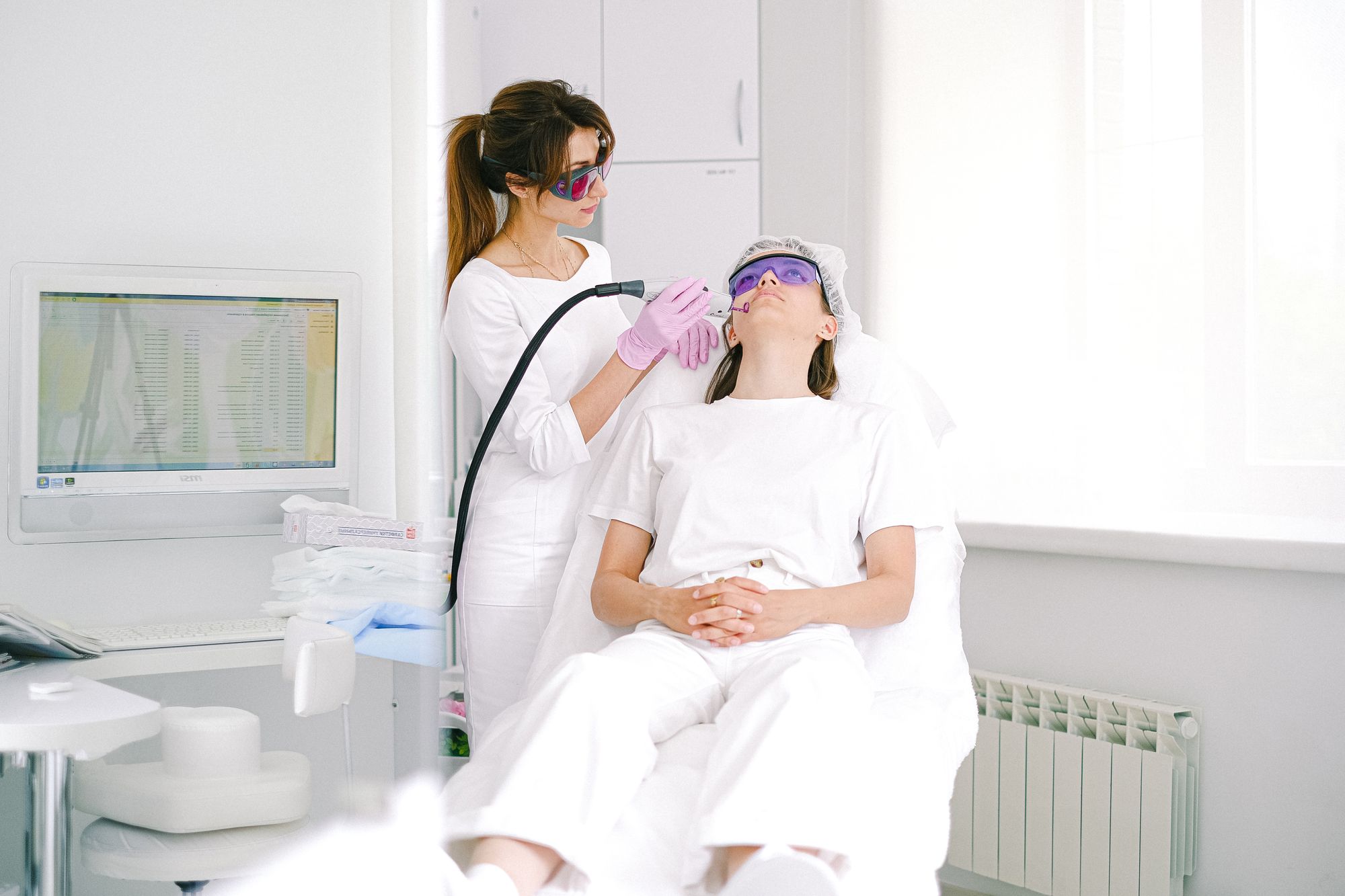
You arrive, numb for a bit, then sit while your clinician traces a fine grid across the area we're treating — most often the upper lid. Each touch is a tiny plasma arc just above the skin: tissue contracts on the spot, and the deeper rebuild begins.
You leave with a precise pattern of tiny carbon dots — they crust, then flake off over five to ten days as fresher, firmer skin emerges underneath. Nothing is cut. Nothing is stitched. The work happens above the surface, through controlled heat.
For the right candidate, it's a non-surgical alternative to a traditional blepharoplasty — social downtime measured in days, not weeks, and no operating room.
Treated areas · Upper eyelids · Lower lids · Crow's feet · Upper lip lines · Neck & décolleté (select cases)
Who it helps.
An in-office hour, no scalpel, no sutures — then a slow tightening you'll see in the mirror over the weeks that follow.
Lid skin that's started to rest on your lash line draws back up — eye makeup sits where you put it again.
For the right candidate, this is the conversation before — or instead of — a blepharoplasty. Days of social downtime, not weeks.
The visible firming isn't a filler or a freeze. It's your skin rebuilding itself across the next eight to twelve weeks — and it keeps going.
The honest answers we give in consult — about the dots, the downtime, and the candidacy conversation that comes first.
We numb the area with a topical compound for about thirty minutes beforehand — most patients describe the session as warm and prickly rather than painful. The eyelid is sensitive, so we work in short, controlled passes and check in throughout.
You leave with a precise grid of tiny carbon dots across the treated area — they crust, darken, and flake off on their own over five to ten days. Mineral makeup is fine after about a week. Plan around the social calendar, not the work calendar.
A subtle tightening shows up once the crusts have flaked. The visible firming continues to build over the following eight to twelve weeks as your own collagen remodels — Plasma Pen is a slow-reveal treatment, not an injection that's done by dinner.
Many patients get the result they were after in a single session. For deeper hooding or more textured skin, we'll plan two — sometimes three — sessions spaced about eight to twelve weeks apart so the rebuild from each visit can finish before the next.
Plasma Pen works best on lighter skin tones (Fitzpatrick I–III) — for darker skin types, the risk of post-inflammatory pigment change is real, and we'll redirect to a safer protocol. Active eye conditions, certain medications, and very advanced hooding (where a surgical lift is the right answer) also factor in. That's what the candidacy consult is for.
A blepharoplasty removes tissue; Plasma Pen tightens what's there. For mild-to-moderate hooding, this is the conversation before — or instead of — surgery, with social downtime measured in days rather than weeks. For advanced hooding, surgery is still the better answer, and we'll tell you so.
Plasma Pen begins with a candidacy consult — not every skin type is a fit, and the conversation up front protects your outcome.

Plus: how we’d use a summer with the schedule on your side. One page, refreshed each month.
Read this month →