

A short visit, a few quiet injections. Over the next three to six months, your body lays down new fat where age, weight, or time has hollowed it out — and what fills in is yours.

You leave the visit looking similar to how you arrived — the change comes later, slowly. What we place under the skin is an adipose (fat) allograft matrix — a soft scaffold made from screened, donated human tissue. Your body reads it as a place to build, and over the next three to six months quietly replaces it with your own fat.
Because what ends up there is your own tissue, it tends to look and feel naturally integrated — soft when you touch it, moving with your face or body rather than sitting on top of it, and lasting in years rather than months.
We use it across the face, the backs of the hands, and the body — hip dips, buttock refinement, and the small dimples or contour irregularities that traditional filler can't quite solve.
Treated areas · Temples · Cheeks · Hands · Hip dips · Buttock contour · Liposuction divots
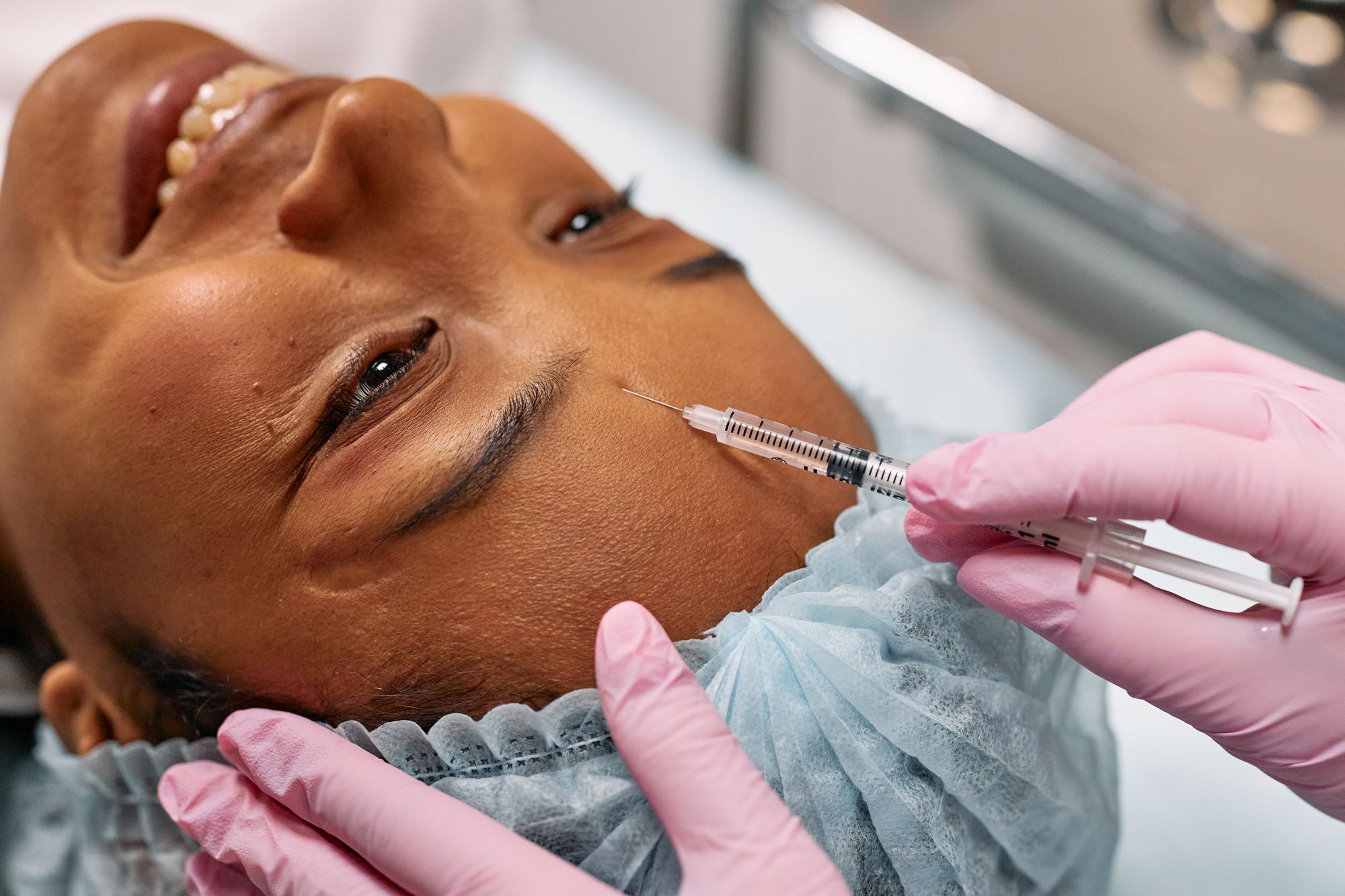
Where it tends to land.
You won't walk out of the visit looking dramatically different — and that's the point. The change shows up week by week: in the mirror, in photos, in the way your face catches the light.
Cheeks, temples, the backs of your hands — the thinning softens and the fullness that quietly went missing comes back, week by week.
Over the months that follow, your body replaces the scaffold with its own fat — not a product that wears off, but tissue you grew.
Because the change arrives slowly, friends notice you look rested long before they notice anything else. It feels native to your face — because it is.
Renuva is unusual — a scaffold that disappears while your own fat takes its place. Here's what we walk through most often at consult.
HA fillers are the volume — a gel that sits where we place it and slowly dissolves over months to a year or two. Renuva isn't the volume. It's a scaffold made from donated, screened adipose tissue that your body breaks down and replaces with your own fat over three to six months. What lasts is tissue you grew — measured in years, not months.
Mostly no — and that surprises people. You'll see some initial volume from the matrix itself plus normal post-injection swelling, but the matrix resorbs over the first few weeks. The real change is what fills in behind it. Most patients tell us friends notice somewhere between week six and month three — never as a sudden change, just "you look rested."
Fair question to ask out loud. Renuva is processed from screened human donor adipose under the same regulatory framework as other allograft tissues — cells and lipids are removed so what remains is the extracellular matrix scaffold itself. There's no donor DNA to react to. The most common side effects are localized: swelling, tenderness, occasional bruising. We'll walk through the full safety profile and your medical history at consult.
Plan on three to seven days of swelling and tenderness at the injection sites — more in the body, less in the face. Bruising is possible. You can go back to normal life right away; we'd ask you to skip strenuous workouts, saunas, and alcohol for 48 hours so the area can settle.
This is the honest tradeoff with Renuva: unlike HA fillers, it can't be dissolved with an enzyme. That's why we treat conservatively, often in two smaller sessions rather than one big one, and choose the right areas carefully. The flip side is the result looks and feels native because it is native — and what doesn't get used by your body simply resorbs.
Often yes, especially for the face and hands. Larger or deeper areas — hip dips, buttock contour, post-liposuction divots — sometimes do better in two sessions spaced about three months apart, once we can see what your body has built from the first round.
We start by looking — together — at where volume has quietly gone. Then an unhurried conversation about the slow, natural rebuild that follows, and whether Renuva is the right place for you to begin.

Plus: how we’d use a summer with the schedule on your side. One page, refreshed each month.
Read this month →